
Recruitment is a tough business.
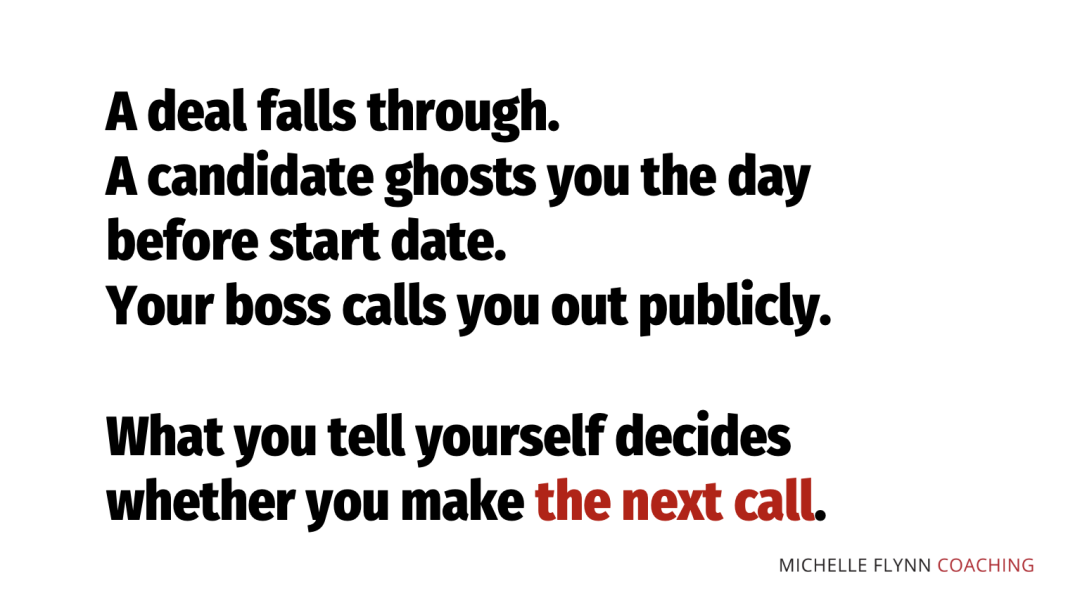
Deals fall through. Candidates ghost you. Clients change their minds. A role you have spent weeks working on disappears. And sometimes, your boss calls you out when you least need it.
Most recruiters know how to deal with the activity. Make the calls. Send the CVs. Build the pipeline. Follow up.
But what happens in your head when things don’t go your way?
That was the question at the heart of a recent session I delivered for TRN members, “Think Clearer Under Pressure: A CBT Toolkit for Recruitment Leaders & Recruiters.” With around 50 people attending, it was one of those sessions where you could feel pretty quickly that we had hit on something that resonated.
We started with a simple question:
On a scale of 1–10, how much does your inner voice help you versus work against you on a hard day?
Because every recruiter has had a deal fall through and immediately thought, “I’m rubbish at this.” The problem isn’t necessarily what happened. It’s what we tell ourselves about what happened.
That is the fundamental principle behind Cognitive Behavioural Therapy: our thoughts about an event can influence how we feel, how we behave and even how our bodies respond.
And in recruitment, that matters enormously.
A bad call can become “I’m having a bad day.”
A lost client can become “I’m not good enough.”
A quiet pipeline can become “I’m falling behind.”
And suddenly, the thing affecting your performance isn’t the event itself. It’s the story you’ve attached to it.
During the session, we worked through a real situation and broke it down: what happened, what did you feel, what did you tell yourself, what evidence supported that thought, what evidence didn’t, and what was a more balanced way of looking at it?
The point wasn’t positive thinking.
It was accurate thinking.
That distinction seemed to land.
Because you don’t need to convince yourself that everything is brilliant when it isn’t. You need to stop one difficult moment becoming a conclusion about yourself, your ability or your future.
We finished by putting the thinking into action: catch the thought, question it, let the body catch up, and then choose the action.
That’s the bit I wanted people to leave with.
Recruitment will always have pressure. There will always be difficult clients, lost deals, difficult candidates and bad days.
We can’t control all of that.
But we can become much better at controlling what happens next.
The messages I received afterwards suggested that 50 recruiters didn’t just attend another webinar. They stopped and thought about how they think.
And perhaps that’s the biggest lesson of all:
Before you change your activity, sometimes you need to change the thinking driving it.
Because in recruitment, performance doesn’t just start with what you do.
It starts with how you think.
If you would like to focus on clearer thinking email me on [email protected] or check out www.michelleflynncoaching.com.