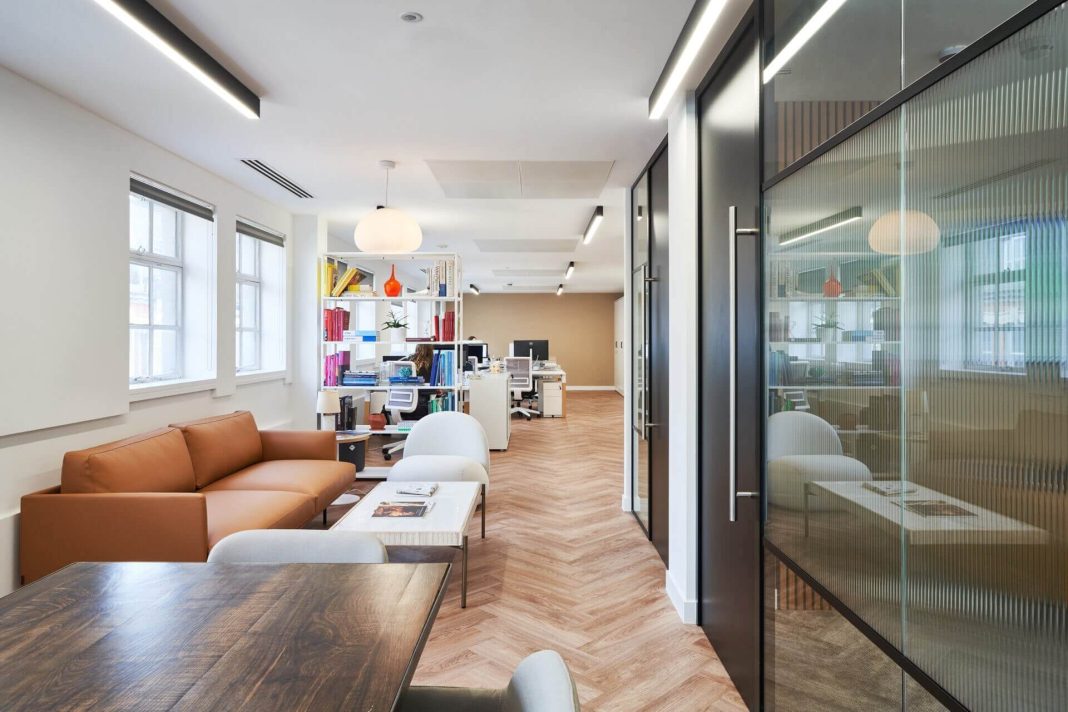

Choosing the right office size is important for any business, especially a growing business or one that includes hybrid working where people are partly in the office and partly remote. You need enough room for your team to work comfortably, hold meetings and take breaks, without paying for space you do not need. The difference between a few seats and work desks could impact price of office rental by thousands or tens of thousands per year – so you want to get it right.
The amount of space you need depends on several things, including the number of desks, meeting rooms, private offices, shared facilities and plans for future growth. You should also consider whether your staff work in the office every day or follow a hybrid working pattern.
Some key questions to ask yourself:
- Do you have hybrid workers?
- How many staff do you expect in the next year or two?
- Do you hold meetings in the office?
- Can meeting rooms double up as work spaces?
- What is your monthly budget?
- How key is commuting to your staff?
Based on this guide by Office Freedom, a managed office for 20 people may need around 1,500–2,000 square feet. A serviced office for the same number of people may need around 1,200–1,500 square feet.
These figures are estimates, not fixed rules. The best size will depend on your business and how you want to use the space.
Office Space Requirements at a Glance
The table below gives an estimated office size for different team sizes.
| Number of people | Serviced office | Managed office |
|---|---|---|
| 10 people | 500–800 sq ft | Around 1,000 sq ft |
| 20 people | 1,200–1,500 sq ft | 1,500–2,000 sq ft |
| 30 people | 1,500–2,000 sq ft | 2,500–3,000 sq ft |
| 50 people | 2,500–3,000 sq ft | 4,000–5,000 sq ft |
These estimates are based on Office Freedom’s experience of helping businesses find office space. They should be used as a starting point rather than a strict rule.
Your final office size will depend on how many desks you need, the layout, the facilities you want and whether you expect your team to grow.
What Is the Difference Between a Serviced Office and a Managed Office?
Serviced and managed offices work in different ways, so the amount of private space you need may vary.
Serviced offices
A serviced office is usually ready to use and may include furniture, internet and other services. Many buildings also offer shared kitchens, lounges, meeting rooms and breakout areas.
Because these facilities are shared with other businesses, you may not need as much space inside your own office.
However, larger teams may want their own meeting rooms or other private facilities.
Managed offices
A managed office is usually arranged around your business’s needs. You can plan the layout and choose the facilities that work best for your team.
Your office may need to include desks, meeting rooms, a kitchen, breakout areas, phone booths and private offices.
Because more facilities may need to fit inside your own space, a managed office often requires more square footage than a serviced office for the same number of people.
How Much Managed Office Space Do You Need?
The following estimates can help you work out how much space your team might need.
Office space for 10 people
A managed office of around 1,000 square feet is a useful starting point for a team of 10.
This could provide enough room for desks, a meeting area, a kitchen and a small space where staff can take breaks.
Office space for 20 people
For a team of 20, you may need around 1,500–2,000 square feet.
An office of approximately 2,000 square feet could include:
- 20 workstations
- A kitchen and informal seating area
- Two phone booths
- Two meeting rooms, one for four people and one for eight
If you also need two private offices for senior staff, you may need closer to 2,500 square feet.
Office space for 30 people
A team of 30 may need around 2,500–3,000 square feet in a managed office.
As your team grows, you may need more meeting rooms and additional facilities. It is important to plan the layout carefully so that everyone has enough room to work.
Office space for 50 people
For a team of 50, around 4,000–5,000 square feet is a useful starting point.
A larger office may need:
- Desks for the team
- A boardroom for 16–18 people
- A meeting room for 10–12 people
- Smaller meeting rooms for four to six people
- A kitchen and breakout area
- Any additional private offices or facilities your business requires
The more facilities you want inside your office, the more space you may need.
What Can Affect the Size of Your Office?
The number of employees is only one part of the calculation. Several other factors can affect how much space you need.
Meeting rooms: If your team holds regular meetings, you may need several rooms of different sizes.
Private offices: Offices for directors or senior staff will increase the total space required, especially if they need room for visitors.
Kitchen and breakout areas: A managed office may need its own kitchen and a place for staff to relax or have lunch.
Phone booths: These provide a quiet place for calls and online meetings without disturbing other people.
Future growth: If you expect to recruit more staff, it may be worth allowing extra room. Around 10% additional capacity can be considered, depending on your plans.
Hybrid working: If staff split their time between home and the office, you may not need a desk for every employee. However, you should consider how many people will be in the office on the busiest days.
Reception and storage: You may also need space for visitors, documents, equipment, server rooms or other specialist facilities.
Think carefully about what your business actually needs before deciding on an office size.
How Much Serviced Office Space Do You Need?
Serviced offices can vary greatly in size and layout. Some provide more space per person than others.
Around 40 square feet per workstation can be used as a broad guide, but this is not a standard that every provider follows.
Rather than looking at square footage alone, consider how many desks you need, what facilities are included and whether the office suits your budget.
Office space for 20 people
A serviced office for 20 people may need around 1,200–1,500 square feet.
Shared kitchens, lounges and meeting rooms can reduce the amount of private space you need. You may also be able to rent a smaller office if you use the building’s shared facilities.
Some businesses prefer to have their own small meeting room while using shared rooms for larger meetings.
Office space for 50 people
A serviced office for 50 people may need around 2,500–3,000 square feet.
At this size, it may be useful to have several meeting rooms within your private office rather than relying entirely on shared facilities.
The final size will depend on the layout, the number of desks and the facilities available in the building.
Why the Number of Employees Is Only the Starting Point
Two businesses with 20 employees may need very different offices.
One business might want a smaller serviced office with shared facilities. Another may prefer a larger private office with its own meeting rooms and kitchen. A third may need private offices for senior staff and extra room for future growth.
Before choosing an office, think about:
- How many desks you actually need
- How much space your team needs to work comfortably
- Which facilities must be private
- Whether you need meeting rooms or quiet working areas
- How you expect the business to grow
Answering these questions will help you find an office that suits the way your business works.
How Does Hybrid Working Affect Office Size?
Hybrid working does not always mean you can reduce your office space by a set percentage.
For example, a business with 30 employees might need 20 desks if staff work on different days. However, it might still need 30 desks if most employees attend the office at the same time.
The important thing is to work out how many workstations you need and how many people are likely to use the office on your busiest days.
You can then choose a layout that makes the best use of the available space.
How Much Extra Space Should You Allow for Growth?
If your business plans to recruit more staff, it may be worth choosing an office with some spare capacity.
Some businesses prefer to rent only the space they need today. Others want room to grow without having to move again soon.
An allowance of around 10% extra capacity may be useful if you expect your team to expand. However, this should depend on your business plans rather than being added automatically.
How Do You Find the Right Office?
Working out the approximate size you need is the first step. You should then compare offices based on their location, cost, layout and facilities.
Before starting your search, consider the following:
- Number of workstations: How many desks do you need?
- Location: Which towns, cities or areas would suit your business?
- Budget: How much can you afford to pay each month?
- Move-in date: When do you need the office to be ready?
- Office type: Would you prefer a serviced or managed office?
- Meeting rooms: How many do you need, and what size should they be?
- Facilities: Do you need a gym, outdoor space, private offices or other features?
- Future growth: Are you planning to recruit more staff?
You should also consider how long you want the agreement to last and whether you need flexibility to change your space in the future.
Comparing different offices will help you understand what is available and which option offers the best value.
It is also worth checking the full cost of each option, including deposits, meeting room charges, furniture and any additional services.