
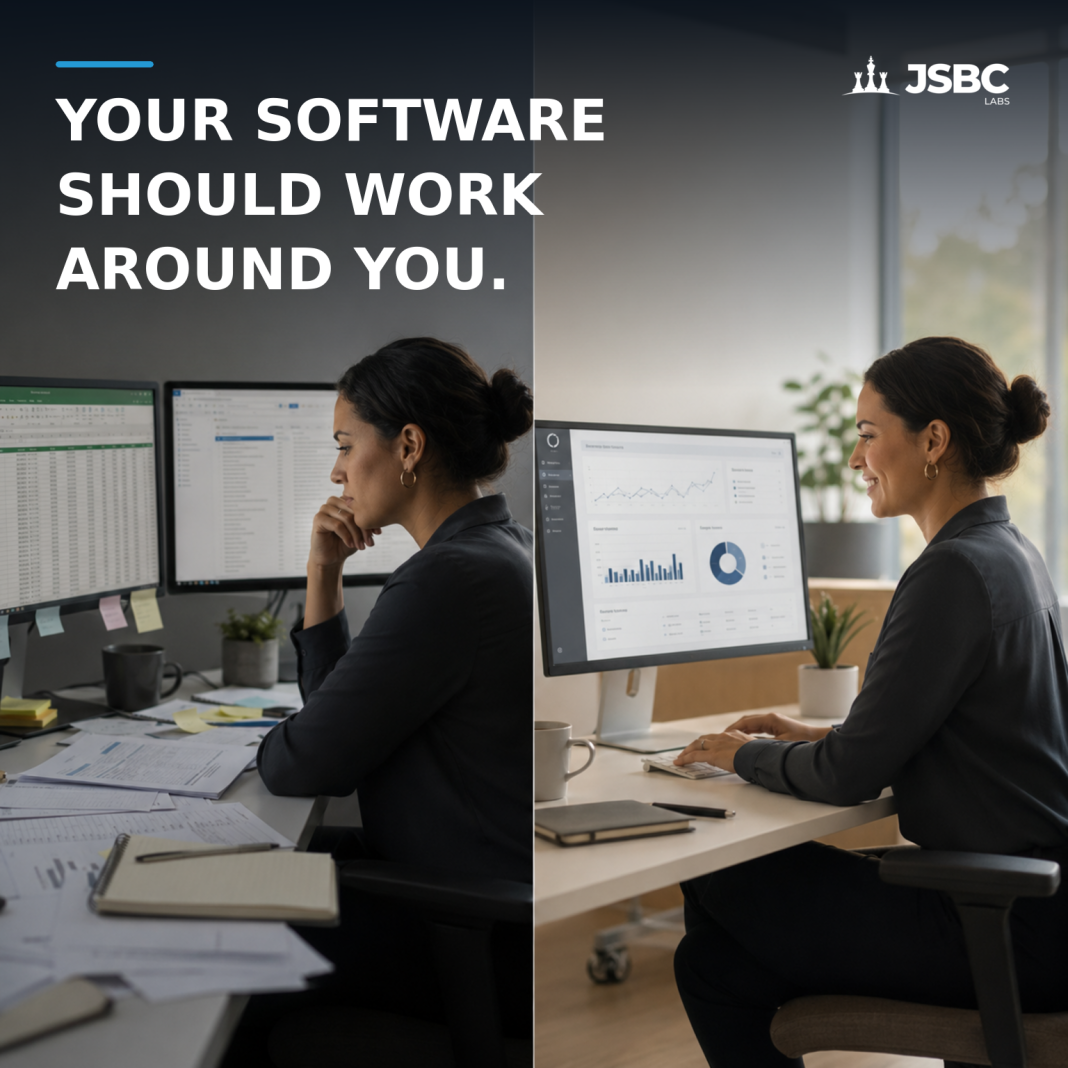

Most businesses do not realise their systems are holding them back.
The software still opens. The team can still complete their work. Reports can still be produced. From the outside, everything appears to be functioning.
Behind the scenes, however, employees are creating spreadsheets to fill gaps, copying information between platforms and relying on manual reminders to keep processes moving.

The system may be working—but the business is working around it.
When Workarounds Become the Normal Process
Workarounds usually begin as quick solutions.
A spreadsheet is created because the system does not track something important. A team member sends a manual reminder because there is no automated notification. Information is entered into multiple platforms because the systems do not communicate with one another.
Individually, these tasks may only take a few minutes. Across an entire team, repeated every day, they become a significant operational cost.
The business begins losing time through:
- Duplicate data entry
- Manual reporting
- Repeated follow-ups
- Searching for missing information
- Correcting avoidable errors
- Switching between disconnected systems
Because these activities become part of the daily routine, they are rarely recognised as problems. They are simply accepted as “how things are done.”
Your Team Should Not Have to Connect the Dots
When business information is spread across emails, spreadsheets, documents and separate platforms, employees become responsible for connecting everything.
They must remember where information is stored, which version is correct, who needs to be updated and what needs to happen next.
This creates unnecessary dependency on individual employees. When someone is absent or leaves the company, important knowledge can leave with them.
The right system should provide a clear, shared view of the business. It should show what has happened, what still needs to happen and who is responsible—without relying on someone’s memory.
Manual Processes Limit Growth
A manual process may be manageable with five clients, ten employees or a small number of monthly transactions.
As the business grows, the same process becomes increasingly difficult to control.
More activity means more admin, more opportunities for mistakes and less visibility for management. Instead of supporting growth, the system creates additional pressure every time the business becomes busier.
This is why simply adding more employees is not always the right solution. If the underlying process is inefficient, expanding the team may only expand the inefficiency.
Before increasing headcount, businesses should ask whether existing work could be simplified, automated or managed more effectively through better technology.
Software Should Match the Way the Business Operates
Every organisation has its own workflows, responsibilities and reporting requirements. Yet many businesses try to force these processes into platforms that were never designed for them.
Effective software should support the way the organisation operates while introducing the structure needed to improve it.
That could include:
- Bringing information into one connected platform
- Automating repetitive administrative tasks
- Creating alerts when action is required
- Giving teams access to accurate, real-time information
- Standardising processes across departments
- Providing management with clear reporting and visibility
The goal is not to introduce technology for the sake of it. The goal is to make the business easier to operate.
Start With the Process, Not the Platform
Before choosing or changing software, businesses need to understand their current processes.
Where does work slow down? Which tasks are repeated? Where are errors most likely to happen? What information does management struggle to access? Which activities depend too heavily on one person?
These questions help identify the real operational problems that technology needs to solve.
A successful system is not measured by how many features it offers. It is measured by whether people can complete their work more efficiently, information is easier to access and the business has greater control over its operations.
Build Systems That Move With Your Business
Your team should not have to fight the software they use every day.
When systems are properly aligned with business processes, employees spend less time on administration and more time on work that creates value. Management gains clearer visibility, processes become more consistent and the business is better prepared to grow.
At JSBC Labs, we help businesses identify operational gaps and develop practical software, CRM and automation solutions around the way they actually work.
Because good software should not create more work.
It should remove it.